

Bottle or bladder? It is one of those outdoor gear debates where both sides are convinced they have the right answer. The truth is less exciting: both work brilliantly for different reasons.
Your choice depends on how you move, how much water you carry and whether you value easy access, easy cleaning or hands-free hydration most. So, Team Bottle or Team Bladder? Here is how they stack up.
| Water Bottle | Hydration Bladder | |
|---|---|---|
| Best for | Easy access, electrolytes, simple cleaning | Hands-free hydration and long days moving |
| Drinking on the move | Can require stopping or reaching into your pack | Excellent, sip through the hose while moving |
| Capacity | Usually lower, although multiple bottles can be carried | Excellent, with options up to 3 L |
| Checking water level | Easy, especially with a transparent bottle | Harder when hidden inside your pack |
| Cleaning | Simple, with fewer parts | Reservoir is easy, but hose and valve need extra attention |
| Pack space | Rigid bottles stay the same size | Flexible and becomes smaller as you drink |
| Electrolyte drinks | Excellent, easy to mix and clean afterwards | Possible, but requires more thorough cleaning |
| Weight | Varies, rigid bottles can be heavier | Lightweight options available |
| Sloshing | More noticeable as the bottle empties | Baffled reservoirs help reduce movement |
| Hands free | No | Yes |
| Best choice if... | You prioritise simplicity, easy refilling and straightforward cleaning | You prioritise hands-free hydration and easy drinking on the move |
Still undecided? Keep reading for the full pros and cons of bottles and hydration bladders, or do what plenty of outdoor people do and carry both.
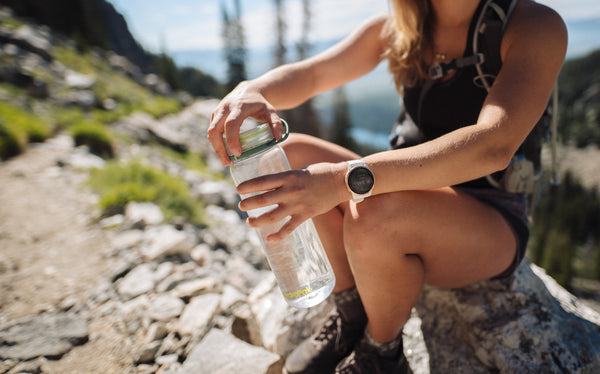
Water bottle pros
1. Easy to see how much water is left
With a transparent bottle such as the HydraPak Recon, one glance tells you how much water you have left. That makes it easier to judge whether you need to refill before the next section of your route.
2. Easy to add electrolytes
Bottles are particularly handy for electrolyte powders and drink mixes. A wide opening makes it easier to pour powder in, shake everything together and rinse the bottle properly afterwards.
3. Simple to clean
Fewer parts generally mean less cleaning. There is no hose or bite valve to dismantle, and many bottles have wide openings that are easy to reach with a bottle brush.
4. Easy to refill
A bottle can be quick to pull out and fill at a tap, hut, campsite or suitable water source. You can also see exactly what is going into it.
Water bottle cons
1. Less convenient while moving
Depending on where your bottle is stored, you may need to stop, remove your pack or reach awkwardly every time you want a drink. That can make frequent sipping less convenient.
2. Rigid bottles stay bulky
A traditional hard bottle takes up the same amount of space whether it is full or empty. If pack space is tight, that empty bottle can become surprisingly annoying. Flexible bottles such as the HydraPak Flux or Stow solve much of this problem by compressing once empty.
3. Weight can add up
Some rigid bottles are heavier than flexible alternatives. That may not matter on a short walk, but every gram becomes more noticeable over long distances.
4. The slosh
As you drink, water gets replaced by air. That means the remaining water has more room to move around, which can create the familiar bottle slosh while you walk or run.
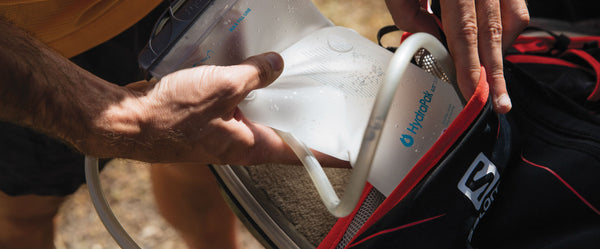
Hydration bladder pros
1. Excellent capacity
Hydration reservoirs are available in a range of sizes, including larger capacities for longer days. HydraPak offers reservoir options up to 3 L in ranges such as the Contour.
2. Drink without stopping
This is the big one. A drinking tube lets you sip while walking, climbing or riding without needing to remove your pack. For long days on the move, that convenience is hard to beat.
3. Comfortable inside a pack
Reservoirs are flexible and designed to sit close to your back. Modern designs such as the Contour also use baffles to maintain a slimmer, more stable shape inside the pack.
4. Hands-free hydration
If you use trekking poles, ride a bike or simply want both hands free, a bladder makes hydration much easier.
5. Efficient use of pack space
A reservoir fits into a dedicated sleeve and changes shape as it empties, rather than leaving you with a large rigid container.
Hydration bladder cons
1. Harder to see how much is left
Because the reservoir is hidden inside your pack, it is not always obvious how much water remains. You may need to open the pack or judge it by feel or weight.
2. More parts to clean
Reservoirs themselves are straightforward to clean, and most HydraPak models are reversible and top-rack dishwasher safe. The tube and bite valve do take a little more effort, though. HydraPak recommends removing the components and using a tube brush for the hose.
3. Water can warm up
A standard reservoir sits against your back inside the pack, so water can gradually warm during the day. If temperature control matters, an insulated option such as the Velocity IT may be a better fit.
4. Big drinks are slower
Hydration bladders are designed around frequent sipping through a bite valve. If you prefer stopping and drinking a large amount at once, a bottle may feel more natural.
So, is a bottle or bladder better?
There is no universal winner.
Choose a water bottle if you value easy filling, simple cleaning and being able to see exactly how much water you have left.
Choose a hydration bladder if you want hands-free drinking, larger capacity and easy access to water while moving.
Or refuse to pick a side.
Plenty of people use a bladder for their main water supply and carry a bottle for electrolytes, camp or extra capacity. The best hydration system is simply the one that makes it easiest for you to keep drinking while you are out there.
FAQ
Is a hydration bladder better than a water bottle?
Neither is automatically better. Bladders excel at hands-free drinking and efficient pack storage, while bottles are easier to inspect, refill and clean.
Are hydration bladders good for tramping?
Yes. They allow you to drink without removing your pack and are particularly convenient on long tramps where regular sipping is useful.
What size hydration bladder should I use?
It depends on your trip length, conditions and available water. Smaller reservoirs suit shorter outings, while 2 L to 3 L options provide more capacity for longer days.
Are hydration bladders hard to clean?
The reservoir itself is usually simple to clean. HydraPak reservoirs are generally reversible and top-rack dishwasher safe, while the hose requires a tube brush for thorough cleaning.
Can you use a bottle and hydration bladder together?
Yes. A bladder can carry your main water supply while a bottle can hold electrolytes, extra water or drinks you would rather keep separate.


